
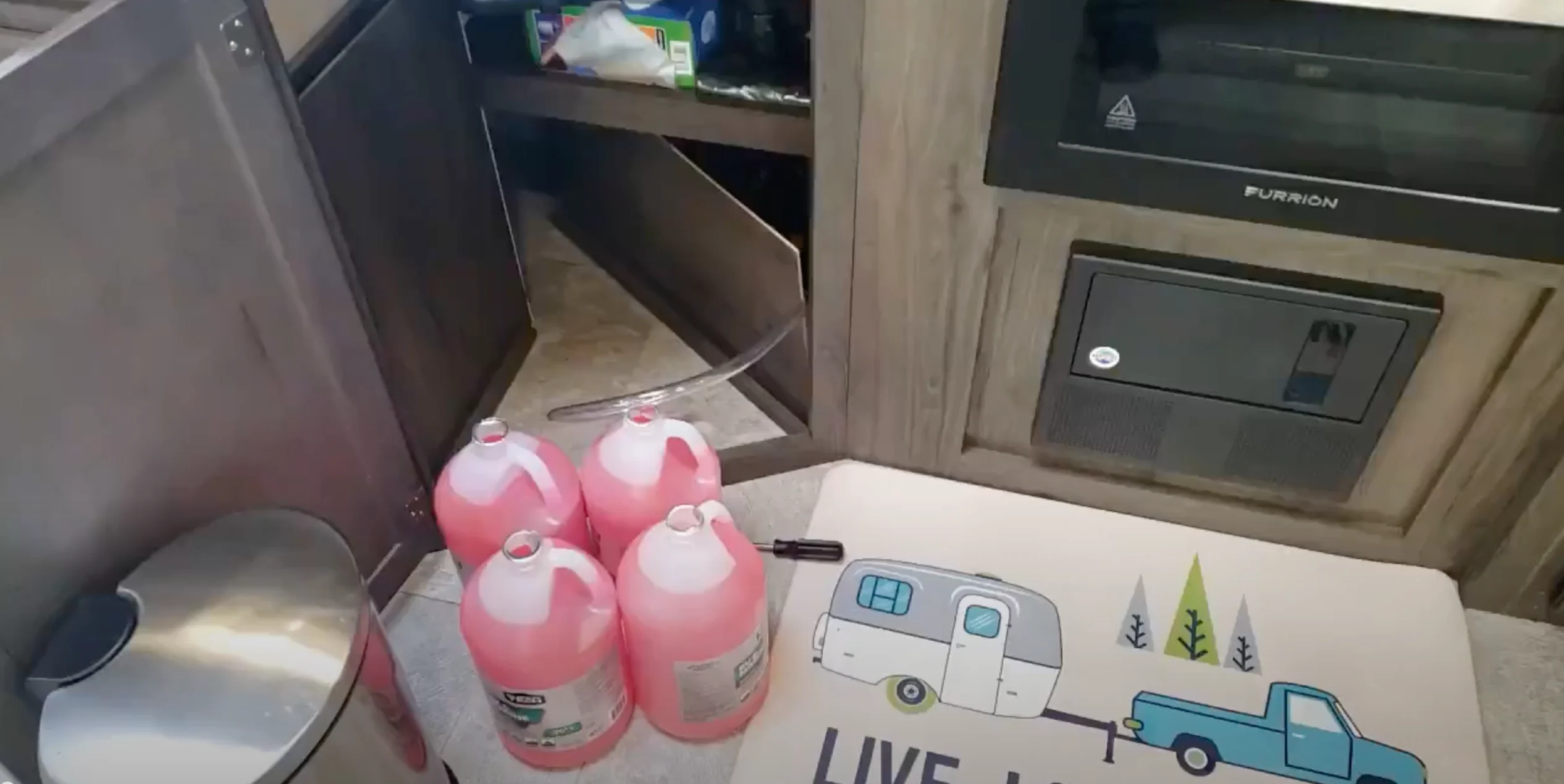
As much as we love camping season, there’s one big to-do when the leaves start falling: winterizing the camper. It is not the most glamorous part of RV life, but it is essential for keeping your rig safe during those long, cold months.
We created this step-by-step winterization video and added our own tips from experience. Whether you’re storing your camper in the driveway or at a seasonal lot, this guide will walk you through the full process of how to winterize your travel trailer or RV.
🧰 What You’ll Need
- RV antifreeze (non-toxic, pink stuff—get 2–3 gallons)
- Water heater bypass kit (if not already installed)
- Water pump converter kit or short hose to draw antifreeze
- Basic tools (screwdriver, socket wrench, etc.)
- Air compressor (optional for blow-out method)
- RV owner’s manual (helpful for locating drain valves)
🧽 Step-by-Step Winterization Process
1. Drain the Water System
Start by turning off your water heater and letting it cool. Then:
- Open all hot and cold faucets
- Flush the toilet
- Drain the fresh water tank
- Open the low-point drain valves
- Remove the drain plug/anode rod from the water heater
Let gravity do the work until all water is out. You can use compressed air here to blow out the lines, but we’ll focus on the antifreeze method.
2. Bypass the Water Heater
You don’t want to waste antifreeze filling your water heater. Flip the water heater bypass valve or install a bypass kit if needed. This reroutes antifreeze through the plumbing instead of the tank.
3. Add RV Antifreeze
Use a water pump converter kit or disconnect the inlet line to your pump and insert a short hose directly into the jug of antifreeze.
- Turn on the water pump
- Start opening faucets one by one—beginning with the closest and working your way out (kitchen sink, bathroom sink, shower, toilet)
- Run each until you see pink antifreeze come out
- Don’t forget the outside shower, low-point drains, and city water inlet (use a small valve or pump to push antifreeze into that fitting)
Flush the toilet until pink runs through the line.
4. Pour Antifreeze Into Drains
To protect P-traps, pour about 1 cup of antifreeze down each sink, shower, and toilet drain.
❄️ Bonus Tips
- Label everything as winterized so no one tries to use the water system.
- Leave faucets open to allow for any expansion.
- Use moisture absorbers inside the camper to prevent mold.
- Unplug and disconnect the battery, or keep it on a trickle charger.
🚫 What Not to Do
- Don’t use automotive antifreeze—only use RV/marine-grade antifreeze.
- Don’t skip the outside shower—that one gets people every year.
- Don’t leave water in the toilet valve or pump—these can crack easily.
🔁 When Spring Comes Around…
Dewinterizing is basically the reverse:
- Drain the antifreeze
- Flush with fresh water
- Sanitize the system with a bleach-water mix
- Reconnect and pressurize the water system